
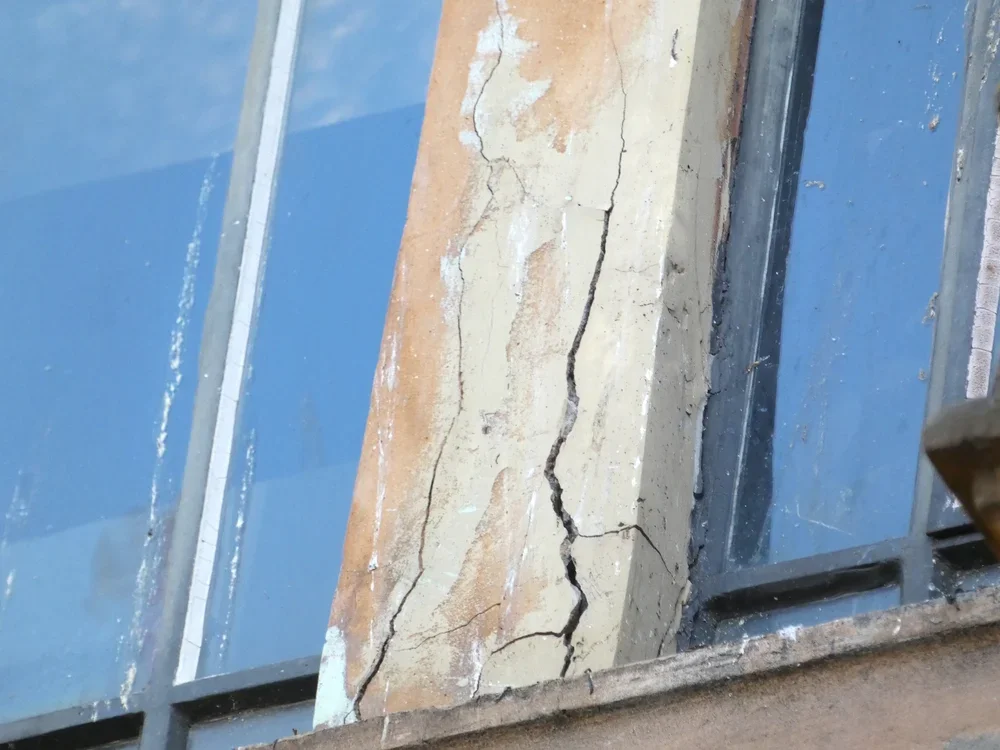
Façade Defects Scan
High-rise façades in Qatar operate under extreme environmental loads: high solar irradiance, rapid thermal cycling, humidity levels exceeding 80%, dust abrasion, and wind pressure variations common in coastal developments such as West Bay, Lusail, and The Pearl. These conditions accelerate material fatigue, reduce façade airtightness, and increase the probability of concealed structural defects.
Effective façade diagnostics are therefore a critical component of asset integrity management, HVAC performance optimization, and GSAS compliance.
Thermal expansion and contraction cycles—often exceeding 40°C of daily differential—cause repeated stress on façade elements. This results in:
Micro-cracking in concrete, GFRC, GRC, and cladding substrates
Sealant shrinkage and adhesion failure at mullions, joints, and glazing beads
Gasket hardening and loss of elasticity
Delamination of composite panels
Corrosion of anchors, sub-frames, and embedded fixings due to humidity and salt exposure
Loss of façade airtightness, leading to increased infiltration rates
These defects seldom appear in early visual inspections yet have significant impact on thermal performance, structural reliability, and safety.
1. Heat Infiltration
Loss of façade airtightness increases infiltration airflows, elevating cooling loads. Cracks and failed sealants are pathways for uncontrolled air exchange, undermining HVAC efficiency.
2. Moisture Intrusion
Capillary ingress or vapor diffusion through façade cracks can compromise insulation layers, cause mold formation, and reduce thermal resistance (R-value) by up to 50% when moisture is present.
3. Panel Instability
Undetected mechanical deterioration—such as corroded anchors, cracked glass or fatigued brackets—may progress toward partial detachment, posing severe life-safety risks in high-rise environments subject to wind suction forces.
4. GSAS and Compliance
Façade performance directly affects GSAS categories including Energy, Indoor Environment, and Materials. Poor envelope integrity increases operating energy intensity and reduces compliance margins.
AI-Driven Condition Analysis
AI models process thousands of façade images to generate:
Automated crack detection, including length, width, and propagation risk
Joint and sealant condition scoring
Panel displacement measurement and anchor failure prediction
Thermal anomaly clustering for moisture or air leakage
Exact GPS and façade-grid location mapping of each defect
Quantified energy-loss estimates, enabling financial projections and potential CO₂ savings
The output is a structured engineering-grade condition report suitable for facility managers, consultants, and insurance documentation.
Impact on Lifecycle Cost and Preventive Maintenance
Façade degradation increases operational cost and accelerates the need for major refurbishment. Early detection enables:
Reduced cooling energy consumption
Minimization of moisture-related deterioration
Avoidance of emergency repairs and unplanned downtime
Extension of façade and HVAC system lifecycle
Improved asset valuation and compliance with Qatar’s sustainability requirements
In high-rise structures, timely identification of façade defects is essential for maintaining both safety and energy performance.
Façade integrity is a critical technical parameter in Qatar’s built environment. Drone-mounted imaging and thermal diagnostics, paired with AI-driven defect analysis, provide a comprehensive, efficient, and high-accuracy method for assessing envelope performance. This approach enhances safety, reduces energy waste, and supports long-term asset resilience under Qatar’s demanding climatic conditions.